Table of Contents
Understanding Sun Damage: Why Sunscreen Really Matters
Exposure to the sun’s ultraviolet rays is the leading environmental cause of skin aging, more than pollution, smoking, or diet alone. This is largely due to UVA, which penetrates deep into the dermis and breaks down collagen and elastin. Even on cloudy days, up to 80% of UV rays can reach your skin. UVB, while less penetrating, has more energy and directly damages the skin’s genetic material, leading to sunburn and increasing the risk of skin cancer.
Here’s what happens when you don’t use sunscreen consistently:
Accelerated aging: Fine lines, wrinkles, sagging skin, and uneven tone.
Pigmentation & melasma: Persistent dark patches often worsen with sun exposure.
Sunburn & inflammation: Red, tender, and dry skin after intense exposure.
Immune changes: UV rays can suppress local immune defenses.
DNA damage: Increases the risk of pre-cancerous and cancerous cells developing.
Daily sun protection isn’t just ‘good to have’, it’s essential for long-term skin health.
Mineral vs Chemical Sunscreens
Mineral Sunscreens:
Mineral filters (Zinc Oxide and Titanium Dioxide) sit on the surface of the skin and reflect/scatter UV rays like a mirror. Think of them like an umbrella.
Pros:
-Instant protection on application
-Extremely broad UVA + UVB defense
-Better tolerated by sensitive, rosacea-prone skin
-Often contains calming ingredients
-Generally considered safer for all skin types
Cons:
-Can leave a white cast on deeper skin tones (though modern formulations mitigate this)
-Thicker textures can pill if applied incorrectly
Chemical Sunscreens:
Chemical filters absorb UVA/UVB and convert them to heat. They need ~20 minutes after application to become fully effective.
Pros:
-Lightweight, often invisible finish
-Easier to layer under makeup
Cons:
-Higher risk of irritation for sensitive skin
-Some ingredients are controversial (Oxybenzone, Octinoxate)
Mineral sunscreens are especially recommended for the Indian climate because they provide stable, broad-spectrum protection with fewer irritating ingredients, a significant benefit for skin prone to pigmentation.
Who Should Choose Mineral (Physical) Sunscreens?
Mineral sunscreens, also called physical or inorganic, use mineral filters like Zinc Oxide and Titanium Dioxide that sit on the skin’s surface and physically block or scatter UV radiation before it penetrates the skin. This contrasts with chemical sunscreens that absorb UV and convert it to heat.
UV radiation & your skin
UVA Rays (320–400 nm): Penetrate deep into the skin, responsible for aging (wrinkles, loss of elasticity) and pigmentation; linked with long-term skin damage.
UVB Rays (280–320 nm): Affect the upper layers (epidermis) and cause sunburn, more intense during summers and midday.
Broad-spectrum sunscreens protect against both UVA and UVB.
Most mineral sunscreens block both UVA and UVB thanks to Zinc Oxide, which offers the most complete physical spectrum protection among FDA-approved filters.
What Does PA++++ Mean?
The PA system measures UVA protection:
PA+ = Some UVA protection
PA++ = Moderate
PA+++ = High
PA++++ = Very High (best line of defense against long UVA, associated with aging/pigmentation)
If a sunscreen is PA++++, it provides superior protection against UVA-induced skin damage compared to PA++ or PA+++ formulas.n damage.
Our 2026 Picks: 4 Best Mineral Sunscreens in India
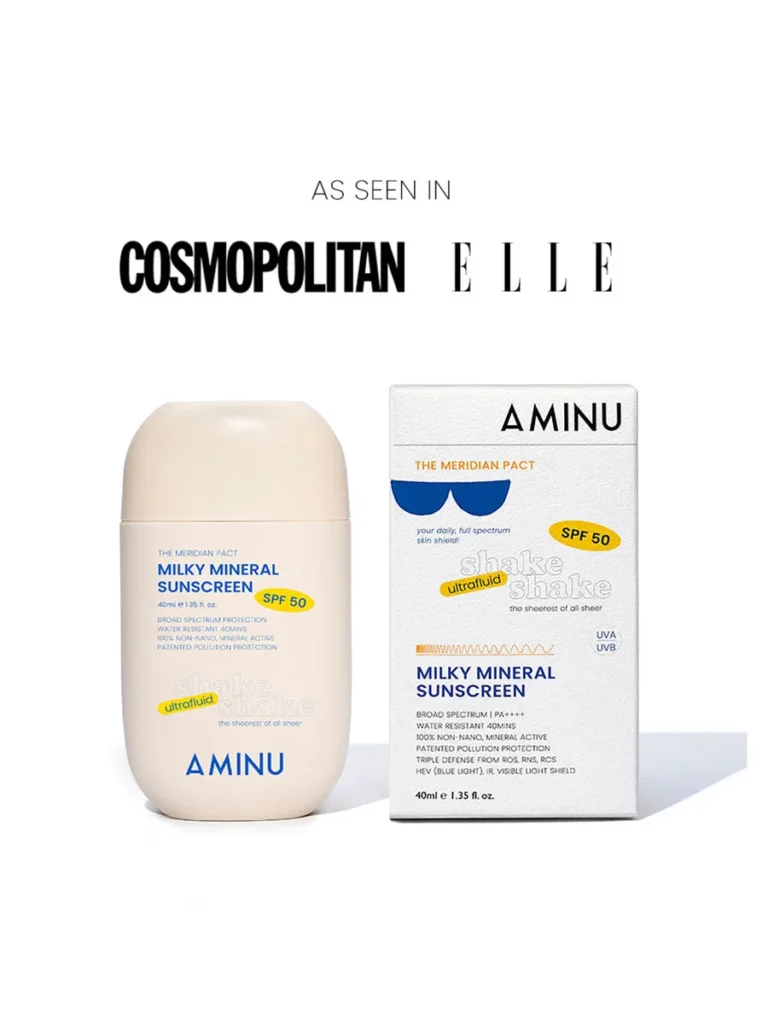
1. Aminu Milky Mineral Sunscreen SPF 50 PA++++
Best for everyday protection, sensitive, and combination skin.
This sunscreen is more than just protection; it doubles as a skincare step.
Texture & Finish
Unlike traditional zinc-based pastes, Aminu is milky and semi-sheer, blending easily into most Indian skin tones. The finish leans slightly satin-matte, making it suitable for daily use.
Key Actives & Skin Benefits
Zinc Oxide- Broad-spectrum blocker
Niacinamide- Barrier support + oil regulation
Antioxidants- Defend against free radicals
A botanical extract cocktail adds cooling and calming effects
Best For
-All skin types
-Sensitive and reactive skin
-Minimalist skincare routines
Perfect for daily wear, sensitive skin, and those who want a mineral sunscreen formula with minimal irritants.
Those with very oily skin may want a more mattifying version or set this with blotting powder.
Product Highlights:
100% mineral spectrum sunscreen
SPF 50 with PA++++ protection
Lightweight, breathable texture with minimal white cast
Free of parabens and silicones.
Complete Ingredients list (INCI):
Water, Zinc Oxide (active), C12-15 Alkyl Benzoate, Jojoba Esters, Caprylic/Capric Triglyceride, Polyglyceryl-4 Diisostearate/Polyhydroxystearate/Sebacate, Propanediol, Tridecyl Salicylate, Niacinamide, Nylon-12, Methylpropanediol, Silica, Coco-Caprylate, Polyglyceryl-2 Dipolyhydroxystearate, Glycine Soja (Soybean) Oil, Oryza Sativa (Rice) Extract & Bran Extract, Bisabolol, Coffea Arabica (Coffee) Seed Oil, Physalis Angulata Extract, Lecithin, Tocopherol (Vitamin E), Rosmarinus Officinalis (Rosemary) Leaf Extract, Sodium Hydroxide, Caprylyl Glycol, Phenylpropanol, Dimethylmethoxy Chromanol, Tetrasodium Glutamate Diacetate, Sodium Chloride.
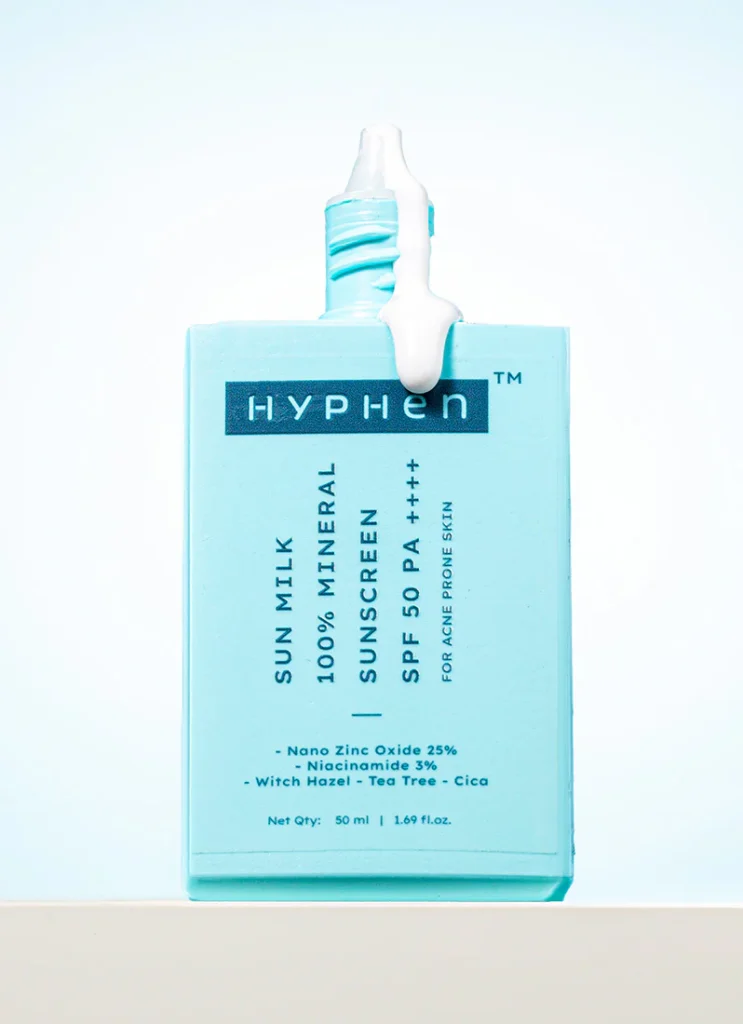
2. Hyphen Sun Milk 100% Mineral Sunscreen SPF 50 PA++++
This is one of the most exciting releases in India given its ultra-light texture, uncommon for mineral formulas.
Absorption & Finish
The formula really does feel like a fluid, not a cream. It dries down clean, without heaviness or shine.
Why do oily/acne-prone skin types love it?
Silica and botanical extracts help absorb excess oil.
Tea tree+neem provide subtle anti-bacterial and soothing properties.
Leaves minimal residue, perfect under makeup or for midday re-application.
Tips for use:
If your skin is very dry, layer a hydrating serum underneath to avoid tightness.
Best for oily and acne-prone skin.
Product Highlights:
Lightweight, milky texture absorbs quickly
Oil control and non-comedogenic
No fragrance or essential oils
Complete Ingredients List (INCI):
Purified Water, Zinc Oxide, C12-15 Alkyl Benzoate, Isostearic Acid, Polyhydroxystearic Acid, Cyclopentasiloxane, Isododecane, Glycerin, Niacinamide, Silica, Dimethicone/Vinyl Dimethicone Crosspolymer, Titanium Dioxide, Cetyl PEG/PPG-10/1 Dimethicone, Willow Bark Extract, Neem Leaf Extract, Tea Tree Leaf Extract, Centella Asiatica, Bisabolol, Witch Hazel Extract, Soybean Seed Extract, and several soothing botanical extracts and humectants.
Why It’s Great:
Botanical extracts like Centella Asiatica, neem, willow bark soothe and help control oil.
Niacinamide brightens and supports barrier repair.
Lightweight formula is ideal for hot and humid climates.
Best for those who want protection without heaviness or greasiness.
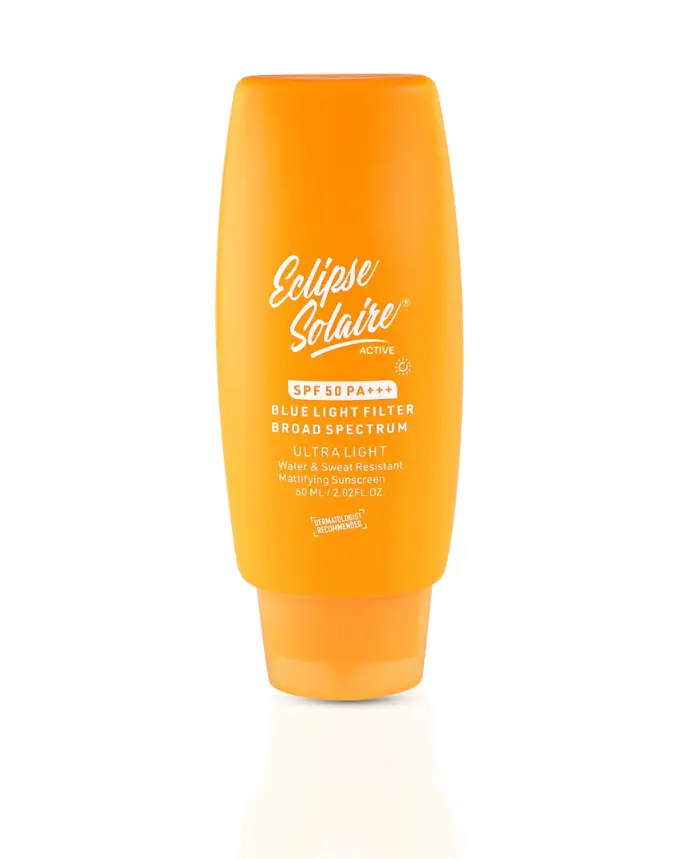
3. Eclipse Solaire Active Sunscreen SPF 50 PA+++
Eclipse is interesting because it blends skincare benefits and mineral protection.
Double Duty Ingredients
Vitamin C: Brightening + antioxidant
Niacinamide: Barrier + pigmentation support
Hyaluronic Acid: Hydration booster
This makes Eclipse especially good for people who want pro-aging + brightening with sun protection.
Texture & Feel
Creamy, slightly more hydrating than the other minimal formulas, excellent for combo to dry skin.
-Daily protection when the UV index is moderate
-Urban professionals exposed to heat + pollution
-People concerned with dullness or early signs of aging
Best gentle mineral blend with antioxidants
Product Highlights:
Mineral filters with antioxidants and niacinamide
Broad-spectrum, water-resistant formula
Less white cast due to micronised mineral filters
Key Ingredients:
Aqua, Micronized Zinc Oxide, Micronized Titanium Dioxide, Vitamin C, Niacinamide, Hyaluronic Acid, Propanediol, Diisopropyl Adipate, Lecithin, Glyceryl Caprylate, Xanthan Gum, C12-15 Alkyl Benzoate, Caprylic/Capric Triglyceride, Caprylyl Methicone.
Why It’s Great:
A combination of micronized mineral filters gives protection with minimal white residue.
Vitamin C & Niacinamide help even tone and support radiance.
Hyaluronic Acid adds hydration, a useful addition when skin tends to lose moisture under strong sunlight.
Ideal for daily wear, especially if you have sensitive skin.
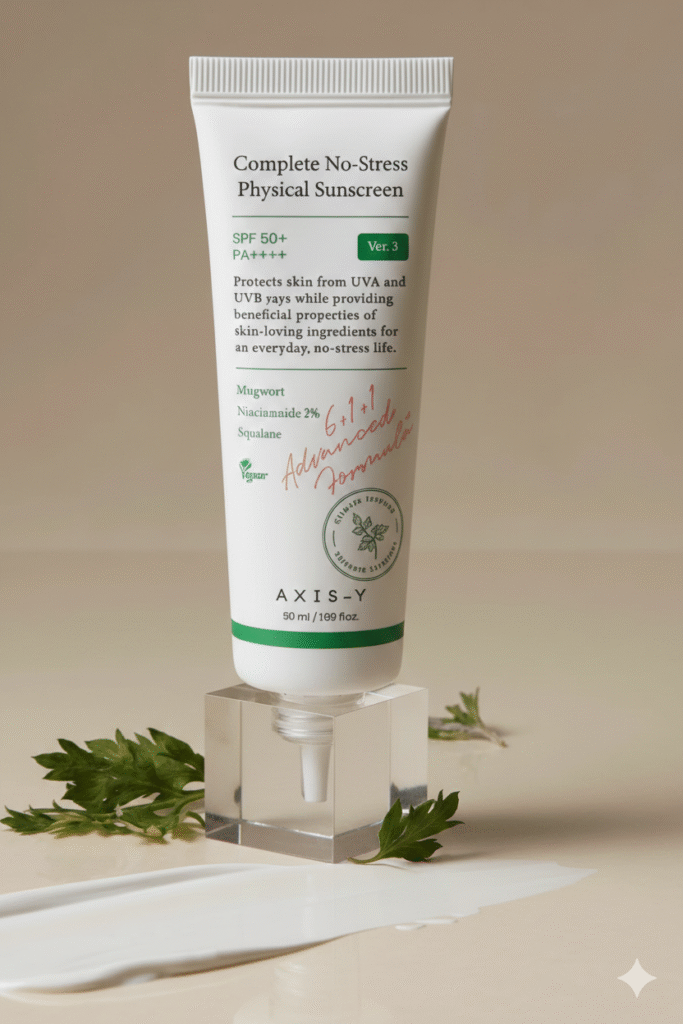
4. Axis‑Y Complete No‑Stress Physical Sunscreen SPF 50+ PA++++
Axis-Y takes mineral sunscreen into skincare territory, with soothing botanicals:
Power Ingredients & Benefits
Mugwort Extract: Anti-inflammatory, healing
Green Tea: Antioxidant, reduces redness
Squalane: Deep hydration without greasiness
This is perfect if you want SPF that feels like a moisturizer + protector in one.
Finish & Wearability
Smooth, non-chalky, and easy to blend. Can be a one-step morning staple for sensitive or dry skin types that also want hydration.
Best all-around mineral sunscreen with skincare benefits.
Product Highlights:
Korean-inspired formula with mugwort extract
Broad spectrum SPF 50+ and PA++++ protection
Contains Niacinamide, Squalane, and soothing botanicals
Ingredients (Selected):
Water, Zinc Oxide, Propylheptyl Caprylate, Butyloctyl Salicylate, Propanediol, Titanium Dioxide, Butylene Glycol Dicaprylate, Dicaprylyl Ether, Caprylyl Methicone, Polyglyceryl-4 Diisostearate/Sebacate, Niacinamide, Calendula Officinalis Flower Extract, Camellia Sinensis (Green Tea) Leaf Extract, Artemisia Capillaris Flower Extract, Vitis Vinifera (Grape) Seed Extract, Chamomilla Recutita Flower Water, Squalane, Allantoin, Tocopherol (Vitamin E), Adenosine, plus supportive emollients and humectants.
Why It’s Great:
Niacinamide helps with brightening and barrier strengthening.
Botanical extracts like green tea and calendula soothe inflammation.
Squalane offers lightweight hydration — excellent for dry or irritated skin.
A daily use mineral sunscreen that feels like skincare, perfect for all skin types, especially sensitive and reactive skin.
How to Choose the Right Mineral Sunscreen for You
| Skin Type | Ideal Sunscreen Features |
|---|---|
| Oily / Acne-Prone | Lightweight, matte finish, non-comedogenic formulas (like Hyphen) |
| Sensitive | Soothing actives + ceramides (like Axis-Y) |
| Dry / Dehydrated | With hyaluronic acid or squalane (Axis-Y mineral sunscreen, Eclipse mineral sunscreen) |
| Daily Commuter | High PA++++ broad spectrum protection |
| Outdoor/Sport | Water-resistant & sweat-friendly (Eclipse, Aminu) |
- 5 Best Sunscreens for all skin types
- Mineral vs Chemical Sunscreens: A Science-Backed Comparison- Coming Soon
- Sun Protection for Indian Skin: Melasma & Hyperpigmentation Guide- Coming Soon
- Skincare Routine for Sensitive Skin in India 2026- Coming Soon
Sunscreen Application Tips (Pro & Easy)
To get the full SPF protection advertised, follow these steps:
Apply BEFORE sun exposure, at least 15 minutes prior.
Don’t skimp on quantity- 2 fingertip units for face + neck.
Reapply every 2–3 hours when outdoors.
Use a wide-brim hat and sunglasses as layers of protection.
If makeup sticks weirdly, apply it on slightly damp skin before moisturizer.
Sunscreen is the last step of skincare, but the first step before makeup.
Seasonal & Climate Guide (India)
Summer (Mar–Jun)
SPF 50+ with PA++++ recommended
Reapply often, especially with sweat
Best Picks: Aminu, Hyphen, Eclipse
Monsoon (Jul–Sep)
The weather can be cloudy, don’t skip SPF
Light fluid formulas help avoid stickiness
Best Picks: Hyphen, Axis-Y
Winter (Oct–Feb)
Sun’s rays still strong, PA rating still matters
You can layer with hydrating serums
Best Picks: Aminu, Axis-Y
Ingredients to Avoid in Sunscreens if you have Sensitive skin
| Ingredient | Why It’s Problematic |
|---|---|
| Oxybenzone | Potential irritation for sensitive skin |
| Parabens | Irritation + controversial safety |
| Fragrance | Sensitizing to sensitive skin types |
| Alcohol (denat) | Can dry skin long-term |
Our featured sunscreens avoid most of these, making them safer for regular use.
| Skin Concern | Best Choice |
|---|---|
| Very Sensitive | Axis-Y |
| Acne Prone & Oily | Hyphen, Eclipse, Aminu |
| Dry & Dehydrated | Axis-Y |
| Glow | Eclipse, Aminu |
| Everyday Protection | Aminu, Axis-Y, Hyphen, Eclipse |
Bonus Tip: Pair Sunscreen With Antioxidants
Using Vitamin C serums or green tea extracts alongside sunscreen can further protect skin from free radicals, especially in high-pollution cities.
The Best Pro-Aging Secret is Consistency
Beyond the science of Zinc Oxide and the technicality of PA ratings lies a simple truth: the most expensive night cream in the world cannot undo what the sun does in a single afternoon. Using a sunscreen in 2026 isn’t just about avoiding a temporary sunburn; it is an investment in your future skin. By creating a physical shield against the Indian sun today, you are actively preventing the collagen breakdown and deep-seated pigmentation that usually appear years down the line. Think of your daily application not as a chore, but as a 30-second insurance policy for a radiant, resilient complexion ten years from now.
FAQs
1. Are mineral sunscreens better than chemical sunscreens?
Mineral sunscreens provide broad-spectrum protection by reflecting UV rays at the skin surface and are often better tolerated by sensitive skin. Chemical sunscreens absorb the rays and convert them to heat. Both have pros and cons, but mineral options are frequently more suitable for sensitive and reactive skin.
2. Will mineral sunscreen leave a white cast?
Traditional mineral sunscreens can, but modern formulations use micronized or nano-sized Zinc Oxide and Titanium Dioxide to minimise white cast. Products like Aminu and Axis-Y are formulated to blend more seamlessly.
3. How often should I reapply sunscreen?
Reapply every 2–3 hours if you’re outdoors or sweating.
4. Can I use mineral sunscreen under makeup?
Yes, most modern mineral sunscreens create a smooth base. Gel or lightweight milky textures like Hyphen Sun Milk work very well under makeup.
5. Can mineral sunscreens protect against blue light?
Some mineral formulas also help block part of the visible light spectrum, which is associated with pigmentation and aging, especially if enriched with antioxidants like Eclipse.
6. Can I use mineral sunscreen on oily skin?
Yes, but choose lightweight, non-comedogenic formulas like Hyphen or Eclipse that balance oil control with protection.
7. Is PA+++ enough, or should I always choose PA++++?
PA++++ offers very high UVA protection. In India’s intense sun, PA++++ is ideal, especially if you spend time outdoors or have pigmentation concerns.
8. Can mineral sunscreen be used on children?
Mineral sunscreens are often recommended for children because they are less irritating.
9. Does sunscreen expire?
Yes, most sunscreens are effective for about 1 year after opening. Always check the expiration date.
10. Can I use sunscreen indoors?
Yes, UVA can penetrate windows. If you’re near windows or get indirect sun exposure, SPF use is still beneficial.
11. Can mineral sunscreen block blue light?
Some mineral sunscreens may help reduce visible light reflection, particularly if enriched with antioxidants. Visible light and HEV light can contribute to pigmentation.
Final Thoughts
For 2026, mineral sunscreens are becoming more comfortable, cosmetically elegant, and skincare-friendly than ever before. Whether you’re seeking strong daily protection (PA++++), hydration for sensitive skin, or oil-control solutions, the options above are among the best mineral sunscreens in India today.
Remember, consistent sunscreen use is the most effective way to prevent premature aging, uneven skin tone, and pigmentation.
Disclaimer
The information provided is for educational and informational purposes only. It is not intended to replace professional medical advice, diagnosis, or treatment. Skincare is not one-size-fits-all. Every individual’s skin type, concerns, sensitivities, medical history, and lifestyle are different. What works well for one person may not work the same way for another. Always perform a patch test before using any new skincare or sunscreen product, especially if you have sensitive, acne-prone, or reactive skin. The mineral sunscreens mentioned in this article are selected based on:
Ingredient composition
Brand transparency
User reviews
General formulation standards
However, results may vary from person to person. Sun protection effectiveness depends on factors such as:
Amount applied
Reapplication frequency
Sun exposure duration
Skin condition
Climate and lifestyle
For personalised skincare advice, ongoing skin conditions, or concerns such as acne, rosacea, melasma, eczema, or pigmentation, please consult a qualified dermatologist or healthcare professional.
Some mineral sunscreens are generally considered safer options during pregnancy and breastfeeding because they use physical UV filters like zinc oxide and titanium dioxide. However, not all mineral sunscreens are automatically pregnancy-safe. Individual formulations may still contain ingredients that may not suit everyone. If you are pregnant, planning pregnancy, or breastfeeding, it is strongly recommended to check the full ingredient list carefully. Consult your doctor or dermatologist before introducing any new skincare product. This blog does not claim or guarantee medical safety for pregnancy unless explicitly stated by the brand itself.
This blog may contain affiliate links. This means that if you click on a product link and make a purchase, I may earn a small commission at no extra cost to you. The price you pay remains the same. Affiliate earnings help support this website and allow me to continue creating free, honest, and research-based skincare content
I only recommend products that:
I genuinely believe they are valuable
Are relevant to the topic
Meet ingredient and formulation standards
Affiliate partnerships do not influence my opinions, reviews, or recommendations. Transparency and trust with my readers are my top priorities.
Always read the product label, ingredient list, and brand instructions. Discontinue use immediately if irritation or discomfort occurs. Seek professional help for any adverse reactions.
By reading this article, you acknowledge that you are using the information at your own discretion and responsibility.